Table of Contents
Two-column resume templates look modern on design showcases like Pinterest and Canva, but they remain a leading technical cause of automated parsing failures in Applicant Tracking Systems.
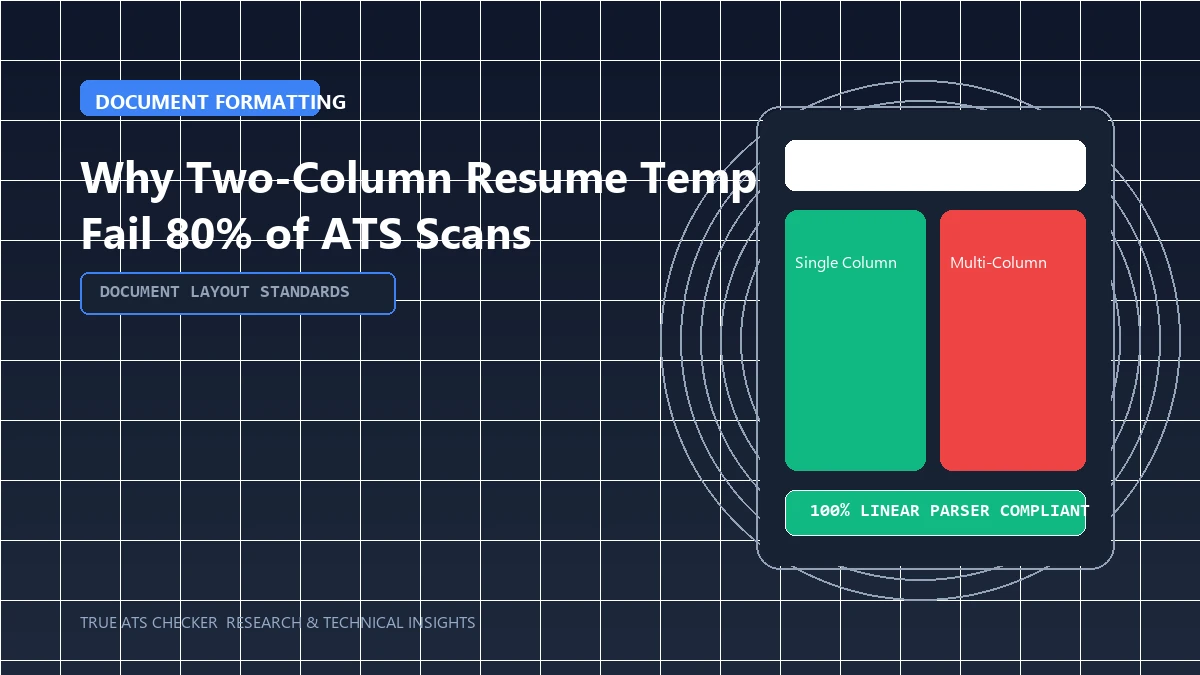
Graphic two-column resumes cause parsers to read sidebar content into the middle of experience bullets, scattering credentials across database fields.
- ✓ Left-hand sidebar templates lose education, contact, and skills data in over 80% of legacy ATS parses.
- ✓ Typographic contrast (bold headings, semi-bold titles) creates executive visual appeal without columns.
- ✓ Reserve two-column visual resumes exclusively for in-person networking and career fairs.
#Direct Answer: Why Two-Column Templates Fail
Standard document parsers process text in a single horizontal stream from left to right. When parsing a two-column resume, older engines and simpler OCR models read across column boundaries rather than finishing column one before starting column two. This causes skills, dates, and job duties to be mashed together, producing corrupted candidate profiles that fail search queries.
The 80% Rule
Most enterprise Applicant Tracking Systems (like Workday and Taleo) require a semantic keyword match score of 80% or higher before forwarding your resume to a human recruiter.
Check your ATS score#Safe Alternative
Use a clean, single-column vertical layout. Single-column layouts are 100% compliant across all enterprise ATS platforms. Download verified single-column templates from our ATS Templates Directory.
#Why Two-Column Resumes Create Data Dropouts
Graphic templates often place contact info and skills in a narrow left sidebar (30% width) and work experience in a main right column (70% width). When an ATS extracts the text stream, it frequently reads the left sidebar header, then jumps into the right column, then returns to the left column, scattering your credentials across unrelated database fields.
This layout fragmentation causes severe indexing issues:
- Orphaned Job Titles: Job titles in column 2 get linked to skills listed in column 1.
- Missing Education Records: Education placed at the bottom of a sidebar is often classified as additional skills or omitted entirely.
- Broken Reading Order: Human recruiters also struggle with scanning zigzagging two-column pages during quick 6-second reviews.
#Visual Hierarchy Without Two Columns
You can create a visually engaging, modern resume using a single-column layout by leveraging:
- Typographic Contrast: 12pt Bold for Section Headings, 11pt Semi-bold for Job Titles, 10.5pt Regular for body bullets.
- Horizontal Dividers: Subtle 0.75pt border dividers under major headings to guide the recruiter's eye.
- Category Skill Matrices: Categorizing skills into clean, horizontal rows (e.g., "Languages: ... | Frameworks: ... | Tools: ...").
#Templates to Discard Immediately
- Left Sidebar "Infographic" Resumes: Templates with colored left panels containing circular headshots and skill progress bars fail automated extraction over 80% of the time.
- Floating Text Boxes: Placing columns inside separate text boxes causes parsers to read them in the order they were created, not the visual page order.
#Frequently Asked Questions
Why do Canva and Etsy sell two-column templates if they fail ATS?
Designers create templates to look appealing on social media and portfolio sites. They prioritize visual symmetry over the backend text extraction mechanics of enterprise recruitment software.
When is a two-column resume acceptable?
Only when printing a physical copy for an in-person career fair, interview panel, or executive dinner where no automated software will ever scan the document.
#Conclusion
Navigating modern recruitment requires combining structural machine-compliance with verifiable professional accomplishments. Audit your resume today with our free True ATS Resume Checker to ensure your qualifications reach the recruiter's desk.
Test Your Resume Against the ATS
Stop guessing. See exactly how applicant tracking systems parse your resume, completely free.
Scan My Resume NowTrue ATS Editorial Team
An expert in career progression and Applicant Tracking System (ATS) optimization. Dedicated to helping job seekers navigate modern hiring algorithms using data-backed insights.