Table of Contents
Pivoting into a new industry or functional role presents unique resume challenges. When your past job titles do not match your target role, standard ATS keyword scans may rank you lower than traditional applicants. A strategic combination of a hybrid resume format, transferable skill mapping, and prominent re-skilling credentials allows career changers to bypass algorithmic roadblocks.
Optimizing for ats optimization for career changers: a step-by-step guide requires aligning verified accomplishments with enterprise applicant tracking system parameters and recruiter review habits.
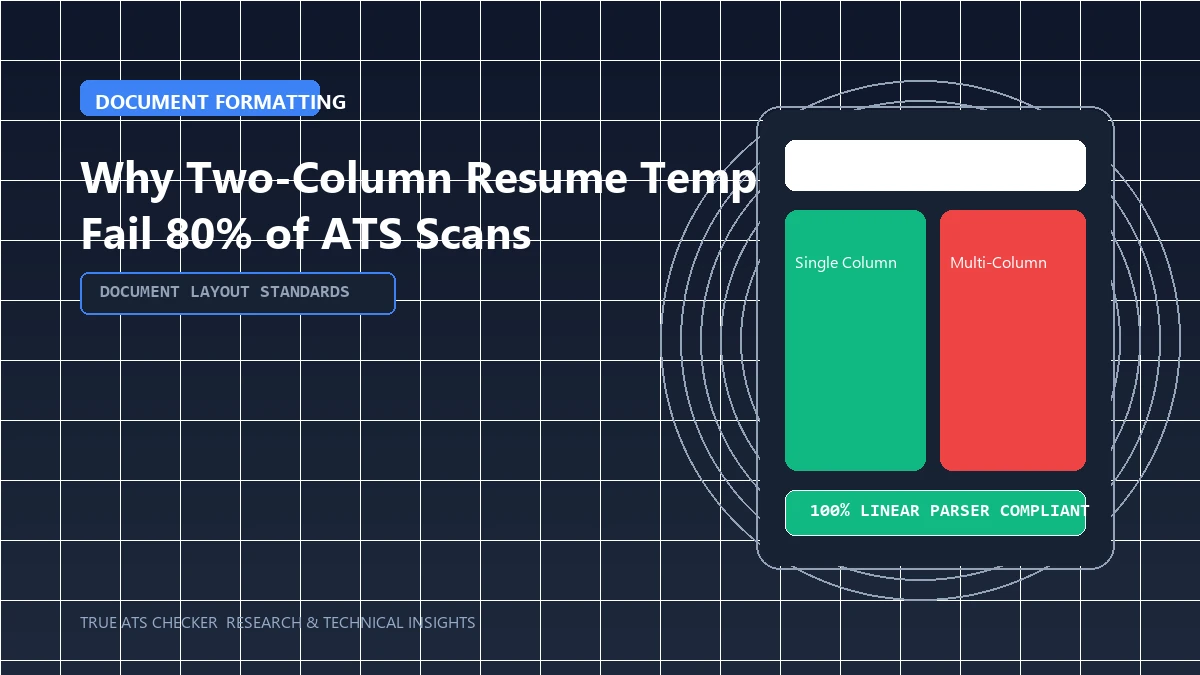
- ✓ Structure credentials in clean, single-column formats to guarantee flawless machine text extraction.
- ✓ Incorporate industry-standard terminology and tool competencies naturally within accomplishment bullets.
- ✓ Quantify commercial and operational results using percentages, dollar values, or project scale metrics.
#Direct Answer: The Career Changer Action Plan
- Use a Targeted Hybrid Summary: Immediately bridge your past domain expertise with your target role in your opening summary.
- De-Jargonize Past Experience: Translate company-specific or industry-specific terminology into universal business competencies.
- Lead with Verified Re-Skilling Credentials: If transitioning to tech or analytics, place certifications, intensive bootcamps, and technical project portfolios ahead of non-relevant past employment.

The 80% Rule
Most enterprise Applicant Tracking Systems (like Workday and Taleo) require a semantic keyword match score of 80% or higher before forwarding your resume to a human recruiter.
Check your ATS score#The Hybrid Resume Architecture for Career Transitions
Transitioning into a new industry (e.g., from Hospitality to Tech Sales, or from Education to UX Design) presents significant ATS challenges. If your historical job titles do not match the target requisition, recruitment algorithms will score your profile low on title relevance.
To overcome this, career changers must adopt the Hybrid (Combination) Architecture:
- Anchor Summary: Explicitly declare your new professional identity in the first line: e.g., "Data Analyst with foundational background in statistical research and financial modeling..."
- Core Technical Competencies: Feature your newly acquired hard skills, tools, and certifications (e.g., SQL, Tableau, Python) immediately below the summary.
- Re-Framed Experience Bullets: De-emphasize previous industry-specific duties and amplify universal commercial deliverables (budgeting, client negotiation, project leadership, data analysis).
#Re-Framing Experience: Teacher to Corporate Instructional Designer
"Taught high school English to 120 students, graded essays, and organized parent-teacher conferences."
"Designed and evaluated modular curriculum programs for 120 learners using ADDIE instructional models, improving learning comprehension benchmarks by 28% through interactive multimedia modules."
#Career Change Pitfalls
- Using Pure Functional Resumes: Traditional functional resumes (no dates, no company context) are rejected by over 90% of recruiters. Stick to a hybrid-chronological layout.
- Apologizing for Past Experience: Own your prior career as a unique competitive advantage that brings cross-disciplinary perspective.
#Frequently Asked Questions
Should I include unrelated past jobs?
Yes, but condense them. Highlight transferable competencies (leadership, client communication, analytics) and eliminate irrelevant specialized duties.
How can I verify if my transition keywords score well?
Test your draft against target job postings on True ATS Resume Checker to identify missing bridge keywords.
#Conclusion
Frame your past accomplishments as powerful assets for your new trajectory. Test your transferable skill alignment with our Free ATS Resume Checker.
Test Your Resume Against the ATS
Stop guessing. See exactly how applicant tracking systems parse your resume, completely free.
Scan My Resume NowTrue ATS Editorial Team
An expert in career progression and Applicant Tracking System (ATS) optimization. Dedicated to helping job seekers navigate modern hiring algorithms using data-backed insights.